Friends of the Wildflower Garden
Warblers in the Garden
by Howard Towle
Spring is the favorite season for many Garden enthusiasts, enjoying the newly emerging ephemerals that carpet the woodland floor.
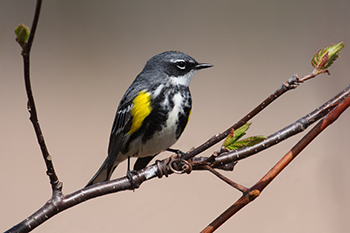
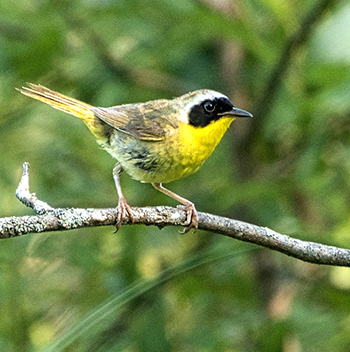
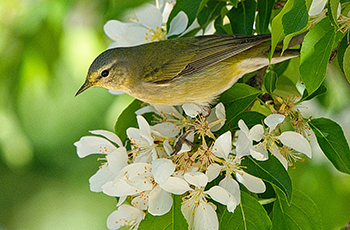
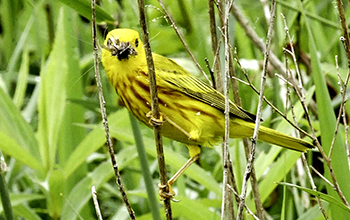
Spring is also the favorite season for most birders, as winter’s hardy residents are joined by throngs of migrants returning from their more southerly winter homes. Among these, the most anticipated for many birders is the return of the colorful and lively warblers. From late April through the month of May, migrating warblers can be encountered on their northward journeys. Twenty-seven warbler species have been reported in the Garden and surrounding Wirth Park. In a typical Spring season over twenty of these can be seen in the Garden. Only two of these species, Common Yellowthroat and Yellow Warbler, regularly nest in the Garden with the majority continuing their treks to breeding grounds in northern Minnesota and Canada. Some of the most abundant migrating warblers that can be found in the Garden are the aptly named Yellow-rumped and Black-and-White warblers, as well as the oddly named Tennessee and Nashville warblers.
While these same birds and their offspring will make a return trip through our area in the fall, spring has many advantages for spotting warblers. First, in the spring all warblers sport their brightest and most colorful plumages, prepared for the annual ritual of attracting mates. By fall, many, but not all, warblers will molt to considerably duller and harder to distinguish plumages. Second, in spring there is often less foliage to thwart efforts to find warblers as they rapidly move about in the trees. Third, warblers and all other birds are more vocal as they prepare for defending territories and attracting mates on their breeding grounds. Often warblers are first detected and identified once their songs are learned by hearing them rather than seeing them.
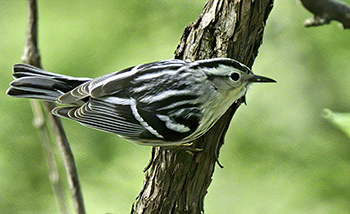


Identifying warblers can be challenging for new birders. Most frustrating is the fact that they seldom stay in one spot for more than a few seconds, constantly flitting from branch to branch and leaf to leaf in search of their insect prey. In addition, chances are you may only get a glimpse of your quarry, perhaps only the undersides or a portion of the bird.
Studying your field guide before heading out helps immensely, as knowing what identifying features to look for is essential. Migration does not occur in a uniform manner but is greatly affected by weather patterns. Look for days with southerly winds, especially following a period of more northerly winds. Some of my best warbler outings have occurred following a late night or early morning rain, which can interrupt migrating warblers. This phenomenon is known as a ‘fallout’. Migrating warblers often follow resident chickadee flocks who know their way around the woodlands. Finding a spot near a stream, pond or lake edge can often lead to highly productive ‘warbling’.
As you get more experienced, learning the songs of warblers can be a great aid in helping to focus your search for new species. There are a number of resources that have recordings of bird songs and calls, including eBird, the bird tracking resource of the Cornell Laboratory of Ornithology at http://ebird.org. You might want to consider joining the Early Birders group that meets each Saturday from April to October to bird in and around the Garden. Having knowledgeable birders to help identify birds can be of great value in learning and more eyes searching often means more birds found. During the Garden Season check with the Garden Shelter at 612-370-4903 for starting times and to sign up. Both experienced and new birders are welcome.
Howard Towle has actively birded at Wirth Park for over 30 years, having seen more than 160 species in the park. Since retirement from the University of Minnesota, he has been a volunteer at the Eloise Butler Garden shelter.
You may also want to read this earlier article about the warblers written by naturalist Tammy Mercer, that was published in The Fringed™ Gentian in sping 2015. PDF of article.
In Years Past;
Eighty years ago on May 19, 1942 Garden Curator wrote in her Garden Log and her diary “A red letter day.” She recorded 24 birds and these 20 warblers: Golden-wings, Parula, Canada, Cape May, Mourning, Yellow-throat, Black-throated, Green, Blackburian, Red Start, Magnolia, Black & White, Wilsons, Tennessee, Nashville, Myrtle, Chestnut-sided, Black-poll, Bay-breasted, and Connecticut. A day later Miss Aler was in and logged 86 species, including 22 warblers. Lulu May Aler originated a bird feeding station at the Garden in 1932 and led an earlier version of “Early Birders” in the Park. For more details on Miss Aler and bird feeding use this link:
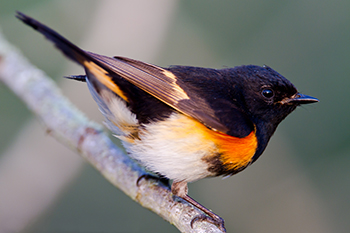
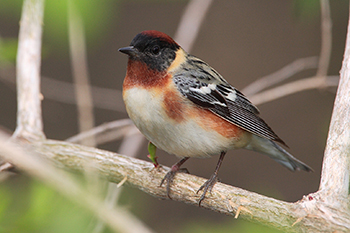
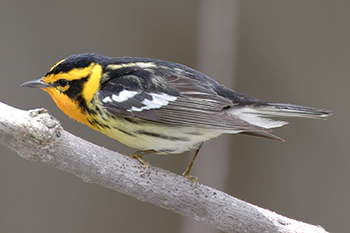
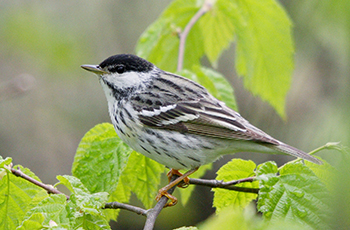
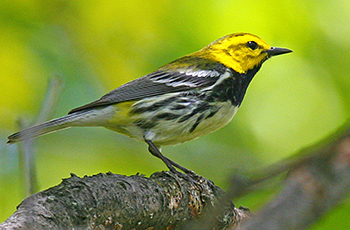
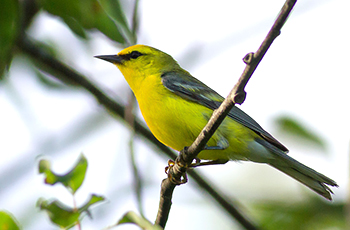
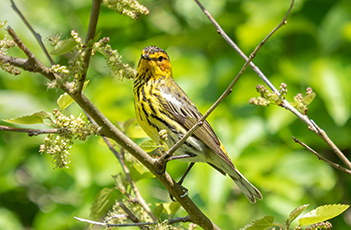
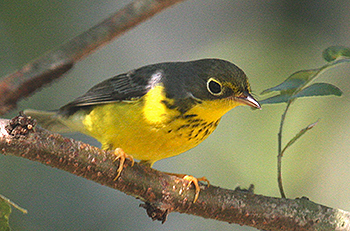
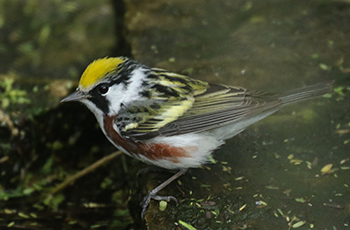
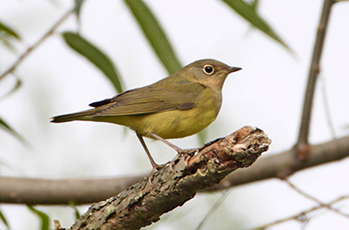
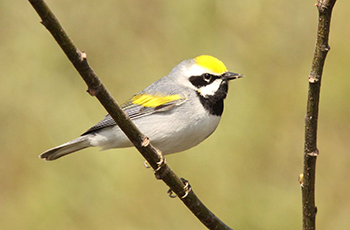
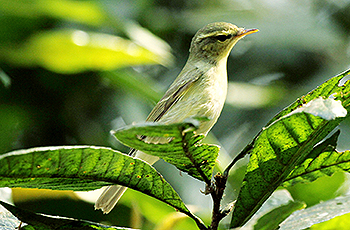
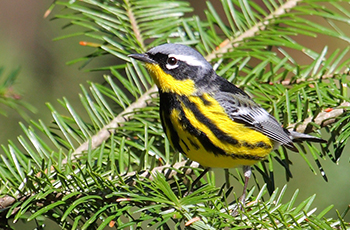
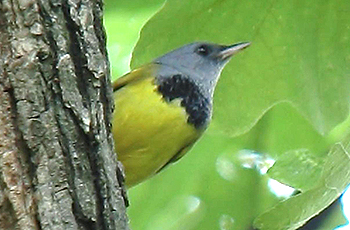
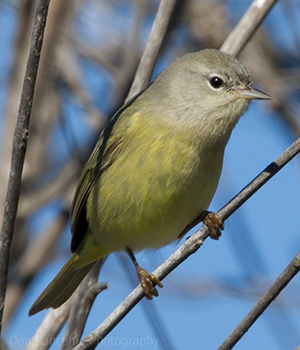
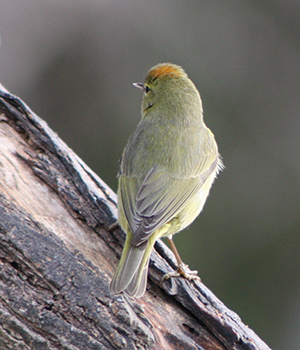
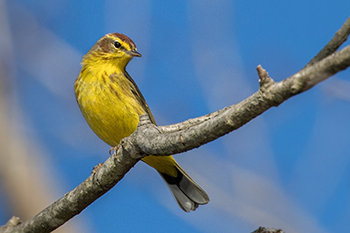
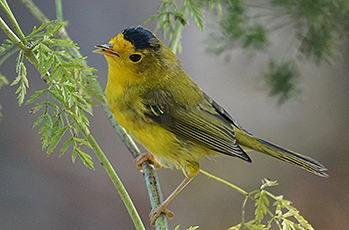
OTHERS: Here are photos of other warblers seen in the Garden. The following photos are all presented under Creative Commons License as noted in the box below the photo sequence. Any use of these photos must attribute the photographer and reference the license.