The Friends of the Wildflower Garden
P. O. Box 3793
Minneapolis MN 55403
Thoreau in Minnesota
In search of health and crabapples
by Gary Bebeau
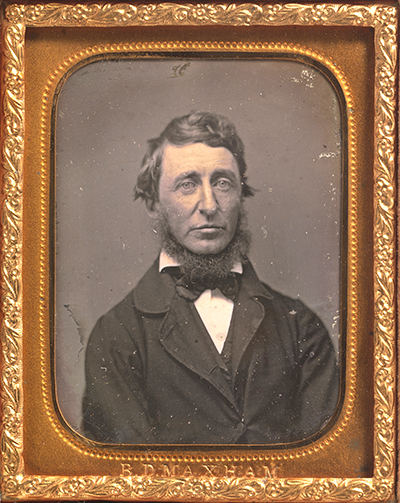
On May 23, 1861, Henry David Thoreau arrived at the Mississippi River near Dubuque Iowa and boarded the steamer Itasca for a trip up river to St. Paul. This journey from Concord was his longest and last away from his home base. He died a year later on May 6, 1862. He came west for a change of air to strengthen his health from the effects of tuberculosis. Traveling with him was young naturalist Horace Mann, Jr. 1
Only one newspaper made note of his visit but that visit created some connections with the Friends of the Wildflower Garden 100 years later. Thoreau was not impressed with St. Paul. He and Mann remained in Minnesota for several weeks, staying for about 10 days at the boarding house of widow Elizabeth Hamilton near the south side of Lake Calhoun (now Bde Maka Ska) on a tract that is now 3810-3826 West Bde Maka Ska Parkway. He was very interested in the lakes, particularly Lake Harriet where he, Mann and Dr. Charles Anderson, a local geologist, spent much time examining the area and making field notes. Thoreau kept a journal that listed all the native plants he saw and identified. 2
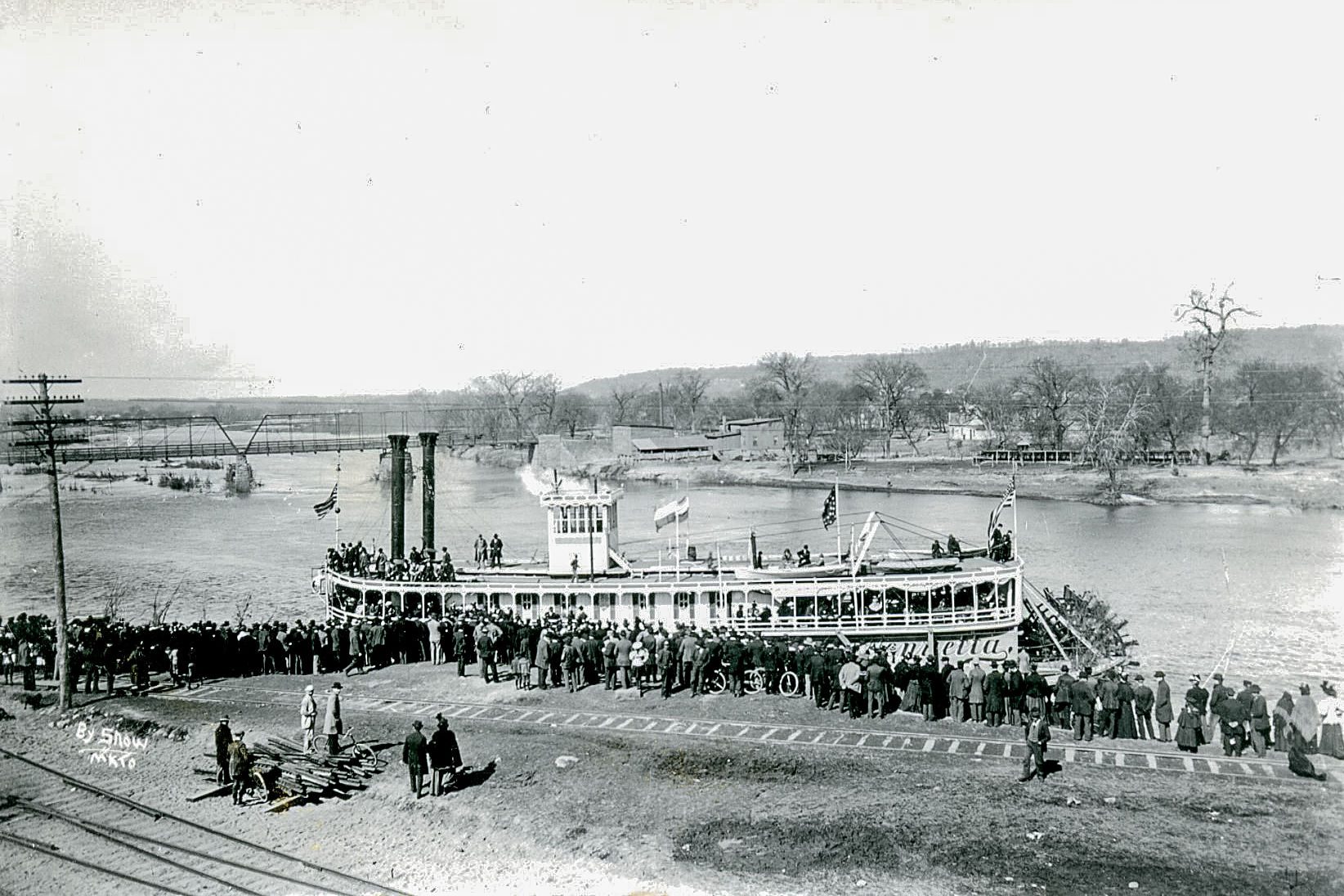
Following their lake stay, an opportunity came to take 6-day journey up the Minnesota River on the Franklin Steel, the same boat as Governor Alexander Ramsey’s entourage, who were traveling to the Lower Sioux Agency to make the annual annuity payment to the Mdewakanton Dakotas. Thoreau noted the Indians spoke eloquently but looked unhappy. The Dakota war broke out the next year. 3
Thoreau wrote in a letter dated June 25, 1861:
“A regular council was held with the Indians, who had come in on their ponies; and speeches were made on both sides thro’ an interpreter, quite in the described mode; the Indians, as usual, having the advantage in point of truth and earnestness, and therefore of eloquence. The most prominent chief was named Little Crow. They were quite dissatisfied with the white man’s treatment of them and probably have reason to be so. This council was to be continued for 2 or 3 days – the payment to be made the 2nd day – and another payment to the other bands a little higher up the Yellow Medicine (a tributary of the Minnesota) a few days thereafter.”
Below: The steamboat Henrietta at Mankato. One of several boats like the Franklin Steel, that plied the Minnesota River. Photo - Brown County Historical Society. [Larger image]
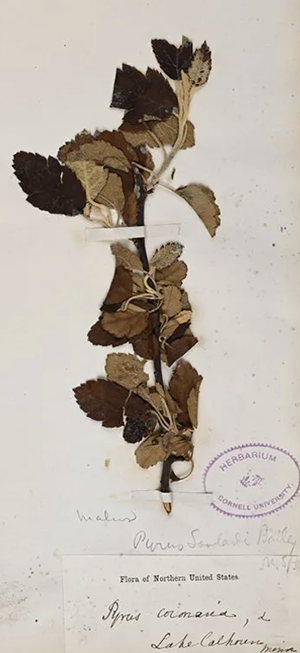
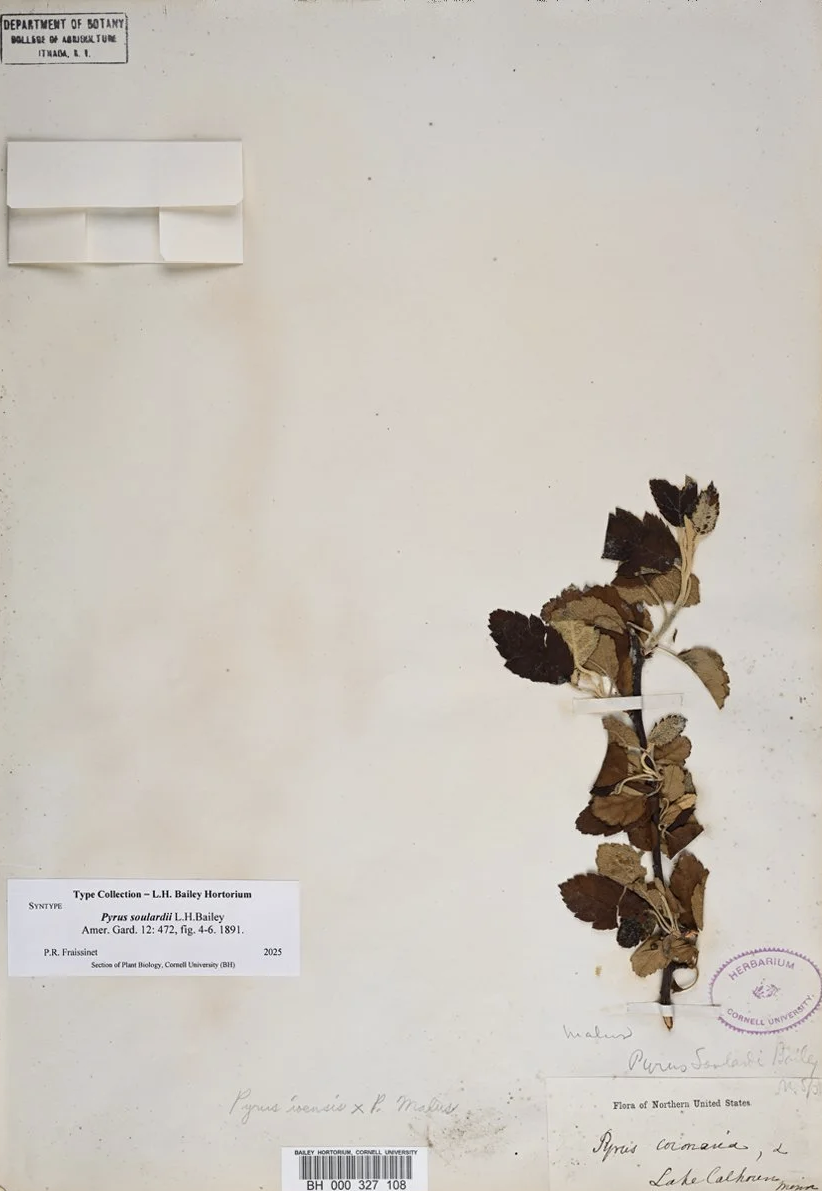
Of interest to us is Thoreau’s pursuit of crabapples, an obsession of his and he had not seen one close at hand until he reached Lake Calhoun where he “touched it and smelled it, and secured a lingering corymb of flowers for my herbarium.” The specimen he and Mann collected is known as Pyrus soulardi and resides in the herbarium of Cornell University. Thoreau’s journal contains these notes:
“She [Mrs. Hamilton] said the wild apple grew about her premises. Her husband 1st saw it on a ridge by the lake shore. They had dug up several & set them out, but all died. So I went & searched in that very unlikely place, but could find nothing like it. She then gave me more particular directions & I searched again faithfully & this time I brought home an Amelanchier as the nearest of kin, doubting if the apple had ever been seen there. But she knew both these plants. Her husband had first discovered it by the fruit. But she had not seen it in bloom here. Then called on Fitch & talked about it. [He] said it was found — the same they had in Vermont & directed me to a Mr. Grimes as one who had found it. He was gone to catch the horses to send his boy 6 miles for a doctor on ac[count] of the sick child. Evidently a [word?] & enquiring man. The boy showed me some of the trees he had set out this spring. But they had all died, having a long tap root & being taken up too late. But then I was convinced by the sight of the just expanding though withered flower bud to analyze. Finally stayed & went in search of it with the father in his pasture, where I found it first myself, quite a cluster of them.” 4
Grimes was a pioneer horticulturalist and first president of the Minnesota State Horticultural Society. He established his Lake Calhoun Nursery near the lake. In addition to the Catalpa trees, the nursery was known for a 1,000-tree orchard and for growing the first Gingko tree in Minnesota. His granddaughter, Marian Grimes, wrote the following in The Fringed Gentian™ Vol. 31 No.1 March 1983:
“I had heard that Thoreau had visited my grandfather’s nursery in Edina. It was called the Calhoun Nursery, and I’ve been told it was the first nursery in Minnesota. My grandfather, Jonathan T. Grimes, came to Minnesota from Virginia because he disapproved of slavery. When my parents were married, Grandfather gave my father the eastern part of his farm, the block between 44th and 45th Streets and Beard and Chowen Avenues South.
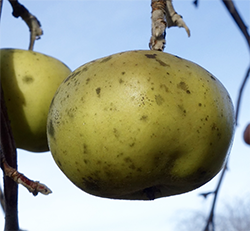
I like to think that the wild apple tree in our garden at 44th and Beard was the one Mr. Thoreau spotted. I picked many a gorgeous bouquet of blossoms from this tree in my child hood and gave them to neighbors. The apples, though! They were like round green olives, very hard, and didn’t even soften from freezing.
My mother, Jennie Alden, was a student of Miss Eloise Butler. The Jonathan T. Grimes home at 4200 West 44th Street in Edina is now listed on the National Register of Historic Places. It is considered to be the best example of Gothic architecture in a home in this area.” 5
Dr. Marian Grimes (1903-1988), an early female physician in Minneapolis, was volunteer coordinator for the Friends of the Wildflower Garden from 1971 to 1980, a Garden shelter volunteer herself, a director of the Friends and active in the Minnesota Mycological Society. Minneapolis poet Betty Bridgman was editor of that issue of The Fringed Gentian™ in 1983 and at that date had lived on land that was once part of the Grimes farm for the past 43 years. Betty wrote over 650 poems; all have been published, including several dedicated to The Friends. 6 ❖
Notes
- 1. “Henry David Thoreau’s Final Journey: Minnesota,” Mayo Clinic Proceedings July 2018.
- 2. Walter Harding, e.d., “Thoreau’s Minnesota Journey”: p. 17‒18 and appendix. Thoreau Society.
- 3. “Thoreau’s Journey along the Minnesota River” - Scott County Historical Society 2019.
- 4. Thoreau’s article about this finding was published as “Wild Apples” in the Atlantic Monthly, November 1862, after his death.
- 5. Grimes established his orchard in 1866 after the civil war was over. When Thoreau visited his property it was not yet a nursery.
- 6. Betty Bridgman wrote two long works dedicated to the Friends can read on these links: Poem on the Dedication of the Martha Crone Shelter on May 13, 1970 and Ode to The Friends on their 30th Anniversary and on the 75th Anniversary of the Wildflower Garden.
Friends of the Wildflower Garden, Inc. "www.friendsofeloisebutler.org." Photos are as credited or public domain if not credited. 061026