These short articles are written to highlight the plants, history and lore of the Eloise Butler Wildflower Garden to past and contemporary events and may include personal commentary of the writer, not necessarily related to the Wildflower Garden. A web of present and past events.
September 2026
Articles
Eloise Butler Council Ring update
When is an aster not an aster?
A lovely native grass for an ornamental
The rise and fall of a natural spring
Eloise Butler Council Ring
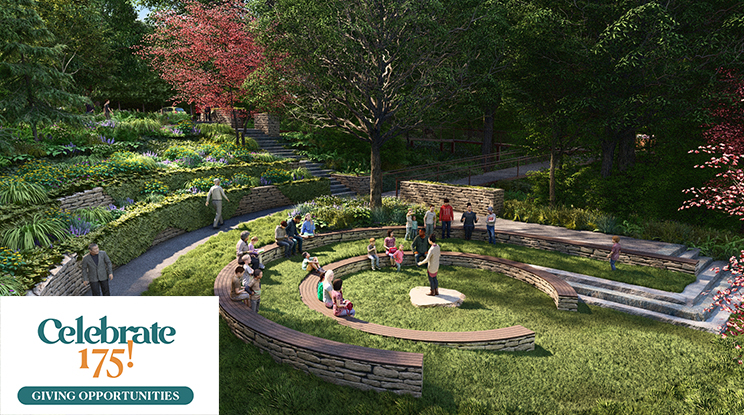
The Minneapolis Park & Recreation Board's design for the first phase of a renovation of the Garden's entrance is now going forward with construction. A centerpiece of the project is a new Council Ring—a welcoming gathering space where visitors can connect with one another, participate in educational programs, and begin their Garden experience.
In honor of Eloise Butler’s 175th birthday, the Friends of the Wildflower Garden are raising $175,000 to help fund the new Council Ring. We have a special gift of $100,000 from a very generous anonymous supported to get us on our way. Thanks to many other generous supporters who have already helped us toward reaching that goal of $75,000. This will give a lasting birthday gift that will welcome and inspire Garden visitors for generations to come.

For more than a century, visitors have found beauty, inspiration, learning, and connection in the Eloise Butler Wildflower Garden and Bird Sanctuary. Now, as we honor Eloise's legacy, we have a unique opportunity to invest in the Garden's future. As we celebrate Eloise Butler's 175th birthday, we invite you to be part of the Garden's next chapter. Together, we can ensure that this beloved sanctuary continues to inspire wonder, foster biodiversity, and connect people with nature for generations to come.
To make a gift or learn more, visit our council ring page or scan the QR code.
When is a flower that looks like an aster not an aster?
As most of you who have followed Eloise Butler’s writings would know, she loved asters, saying once “The one I look at last, I like best of all.” And love them and plant them she did!
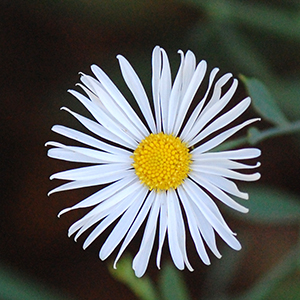
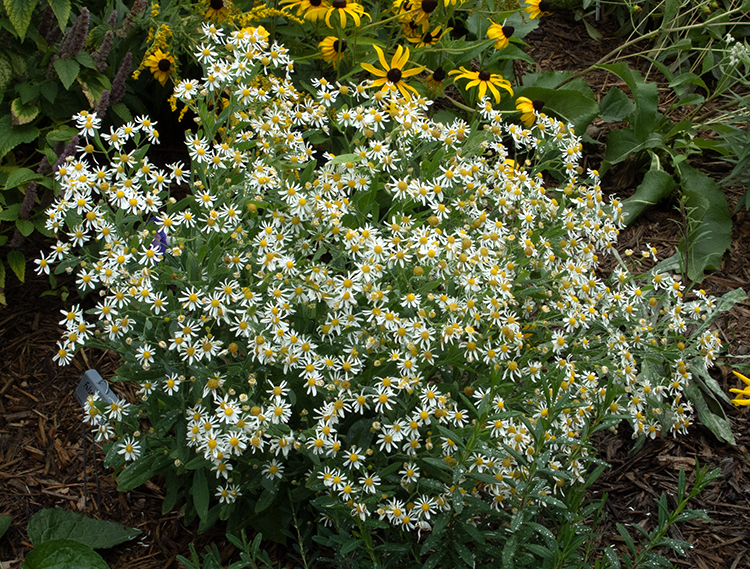
But there is one that she mentioned and planted often and while it is in the aster plant family, it is not really what is considered an “aster”. In fact it is usually named “false aster” in official listings such as the MN DNR plant census. I’ve written before about the prejudice against using the word “false” in a plant’s name but fortunately here we have an alternative name - white doll’s eyes - but then I must also say, unfortunately, because that is also the common name for the white baneberry. Eloise was aware of that so she referred to it simply as “boltonia,” from its scientific name Boltonia asteroides, the species name asteroides meaning "resembling an aster."
Beginning in 1912, Eloise planted it in her wild flower reserve 13 times; Martha Crone 3 times in the 1930s and it was still present in the Wildflower Garden at the time of her 1951 census. In Minnesota it is found in its native form in 30 counties, including most of the metro area. Of course, with such a well liked plant, there are a few nursery cultivars available for those who don’t want the pure form.
The resemblance to the real asters differs in the larger number of ray florets and the larger center disc which is more of a button shape - hence the “white doll’s eyes”. It blooms August through September in soils more most than dry. It can form a bushy rounded plant with moist soils or a more spindly shape, depending on soil moisture conditions.
A lovely native grass to use as an ornamental
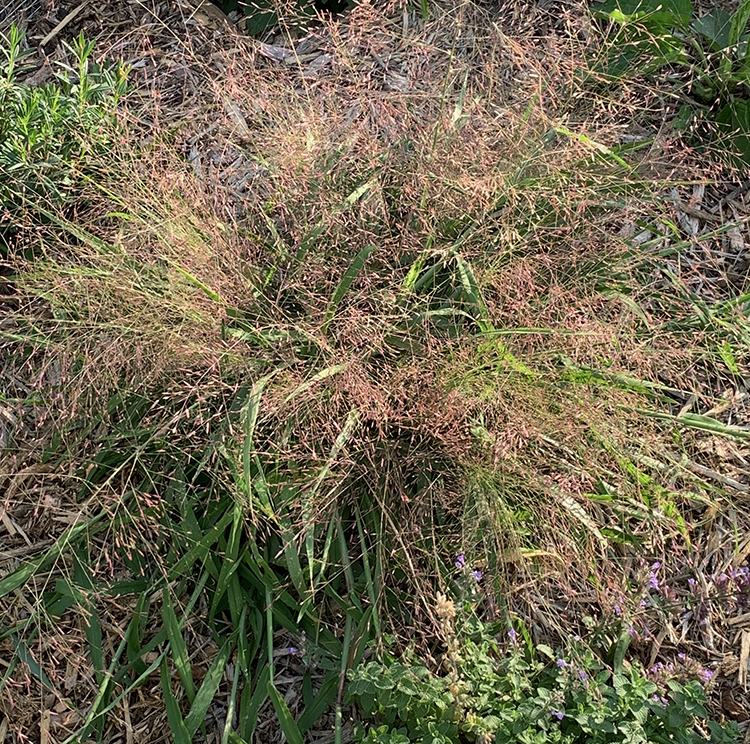
It’s lovely, low growing, drought tolerant, has an airy cloud-like seed head of purplish-red, behaves nicely and is native to boot, which is why it makes a great ornamental grass. I am writing about purple lovegrass, Eragrostis spectabilis.
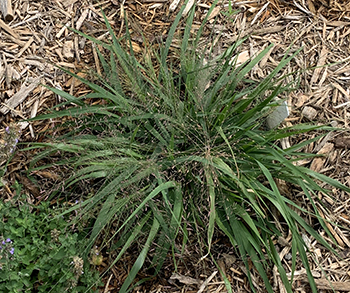
The grasses of this worldwide genus are all usually called lovegrasses. Purple lovegrass is native to Minnesota, found in 29 counties, including all the metro, according to the MN DRN county census. Perhaps because it is a grass, there is no record of it ever having been in the Wildflower Garden, but then, grasses were not high up on Eloise Butler’s plant list in her woodland/wetland type garden. Martha Crone might have tried it in her upland garden but there is no record of that.
The plant blooms from mid-summer into fall when the blue-green foliage turns to a bronze to purplish color. It is a warm season, clump forming grass. The seed panicles rise above the leaves to a height of no more than 24 inches. It likes soils more dry and less rich and in a home garden landscape, don’t overwater it.
The rise and fall of a natural spring
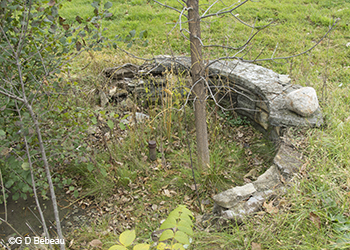
Each day hundreds of people drive by the intersection of Wirth Parkway and Glenwood Avenue, perhaps on their way to or from the Wildflower Garden just around the corner off Wirth Parkway. Most probably never pay any attention to a ragged group of shrubbery on the NW corner of the intersection, but therein lies one of the four natural springs in the immediate area of the Wildflower Garden.

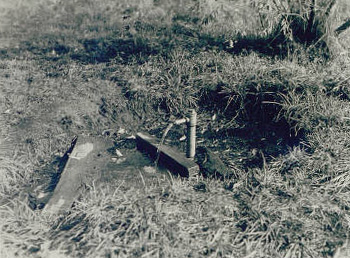
Waters rose from the ground millennia ago, seven decades ago they retreated. What remains today is a capped metal pipe sticking out of the ground and the crumbling semi-circle of stonework. In 1939 a WPA masonry crew installed that stone work and a catch basin. Prior to that the spring area was basically unimproved, similar to the nearby Great Medicine Spring and the Bubbling Spring. In 1939 all the springs underwent improvement or shall-we-say “beautification”. The crews came back in 1941 and installed concrete steps leading from the Parkway down to the spring. By 1954 the spring had dried up.
In 1955 when Charles Doell was superintendent, a development plan was created for the south of Wirth Park. An item on the development study was to eliminate this spring. A lot of the development plan never happened, but perhaps that was when the spring concrete work was removed, leaving only the circular stone basin. Today, nature has taken over, the staircase is gone, but the traces of history are there.
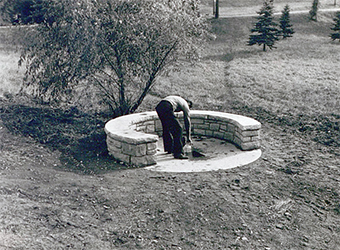

Our article on the history of all four natural springs in the area of the Wildflower Garden.
Florilegium exhibit reminder
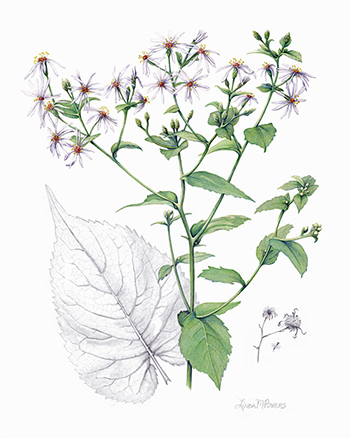
One last reminder that for a second time this year you will be able to see the drawings of plants in the Eloise Butler Wildflower Garden that were created for the Eloise Butler Wildflower Garden Florilegium Project which wrapped up in 2025 with 111 completed drawings. Opening September 26th at the University of Minnesota’s Bell Museum will be an exhibit of the entire collection with the show ending on January 3, 2027. An exhibition catalogue will be available only at the opening reception - October 7, 2-3:30pm. The catalogue will illustrate one work by each of the artists involved in the Florilegium. The Friends are sponsoring a later event at the Bell during the exhibition. Details on that will be out shortly
Historical Photo
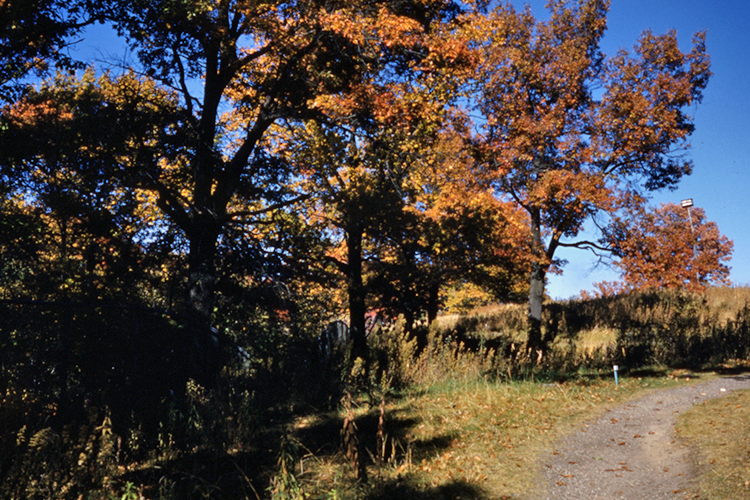
The entrance to the upland garden on October 17, 1952. In the distance is the white oak on the central hill of the upland with the martin house (no longer there) on a tall pole on the slope of the hill. Just off the bottom right corner of the photo is the current location of the restrooms and the new storage buildings. Photo ©Friends of the Wildflower Garden from a Kodachrome by Martha Crone, October 17, 1952.
Not subscribed to our email?
Questions about Twigs and Branches?
Email the writer at this address.
Want to donate to support our mission for the Eloise Butler Wildflower Garden?
Link to donation page
Or use the QR code below.

©2026 Friends of the Wildflower Garden, Inc. "www.friendsofeloisebutler.org." Compilation, editing by G. D. Bebeau. Photos by G D Bebeau or as credited. 092026