These short articles are written to highlight the plants, history and lore of the Eloise Butler Wildflower Garden to past and contemporary events and may include personal commentary of the writer, not necessarily related to the Wildflower Garden. A web of present and past events.
November 2026
Articles
Eloise Butler Council Ring construction begins
Florilegium exhibit and event a great success
Construction begins on the Garden Entrance Renovation Project
The centerpiece of the entrance renovation project is an amphitheater area designated as the Council Ring—a welcoming gathering space where visitors can connect with one another, participate in educational programs, and begin their Garden experience.
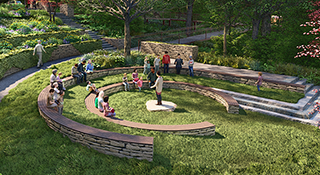
In honor of Eloise Butler’s 175th birthday, the Friends of the Wildflower Garden began a funding campaign in July 2026 to raise $175,000 for the basic construction of the Council Ring. Thanks to a generous supporter who pledged the lead gift of $100,000, and with $50,000 added by another anonymous donor, a total of $220,000 had been contributed by November 5th 2026. An additional $55,000 is needed to cover some special parts of this project to make the entire area complete. The MPRB is funding the larger cost of the other project parts that included new paths, stairs, parking lot and landscaping.
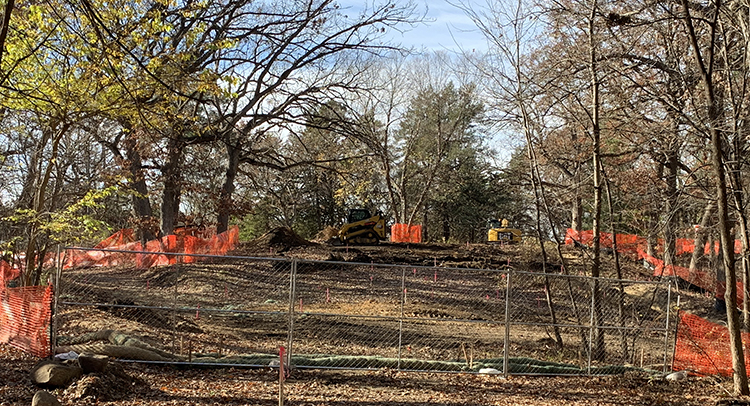
Following the close of the Wildflower Garden at the end of October, construction equipment moved in and began the earth work needed to reshape the hillside entrance to the Garden. Only one tree had to be removed and many more will be planted as part of the new landscaping.
To learn more, visit our council ring page. If you have not yet donated, perhaps now is the time!
Below: Construction for the Entrance Project Renovation began after the Garden closed for the season. Photo G D Bebeau.
The Atacama in Bloom
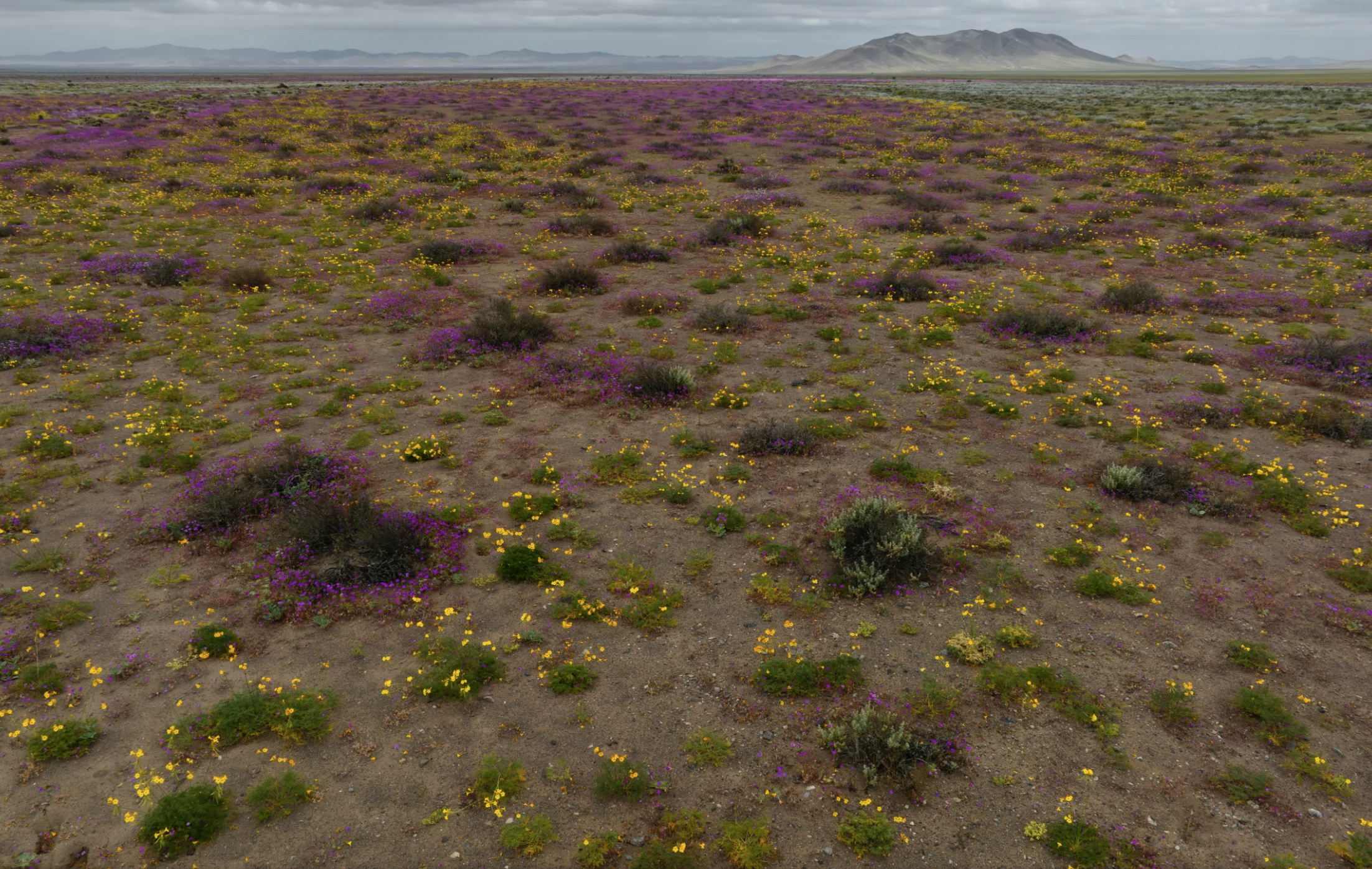
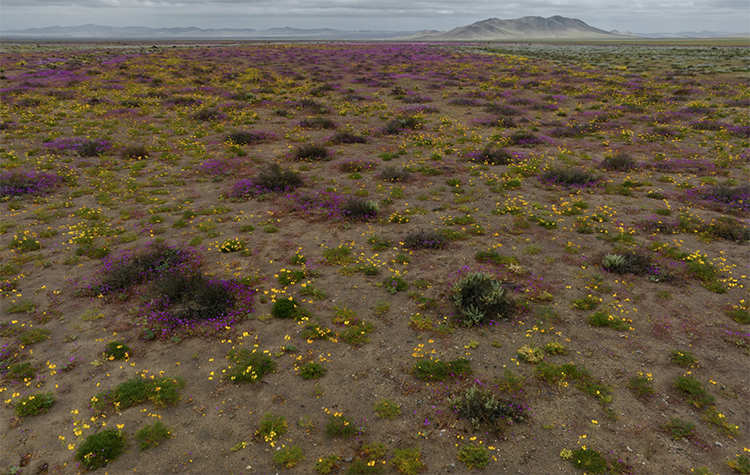
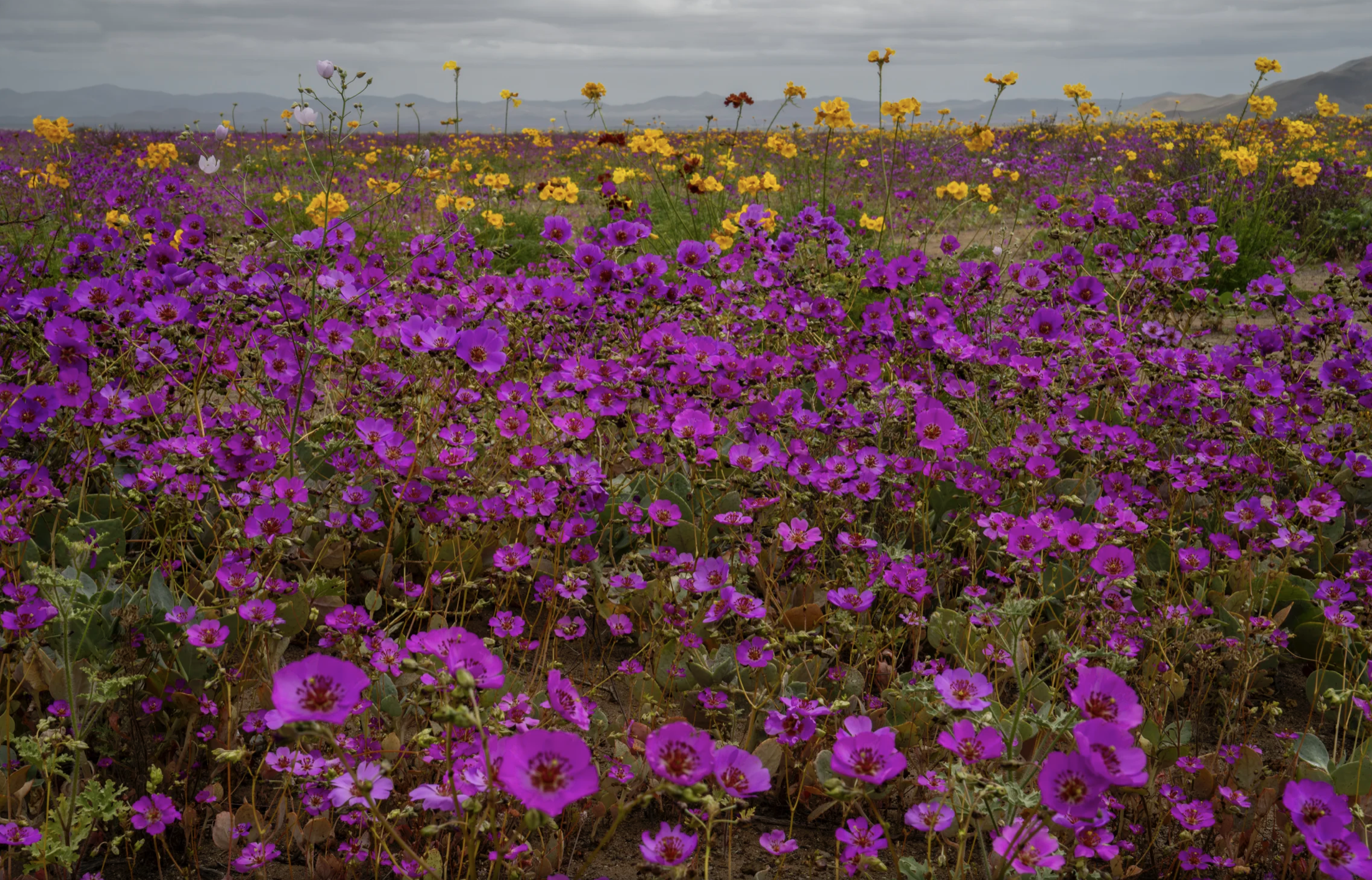
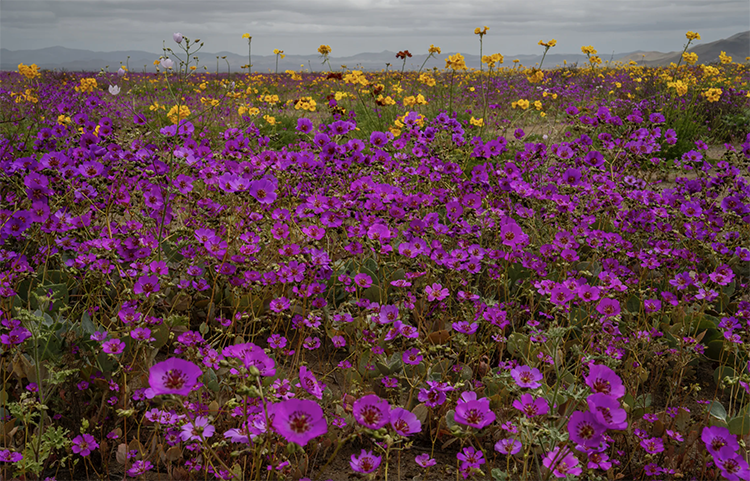
It’s spring in the southern hemisphere and the effects of El Nino have produced much more rain then normal in Chile and the driest desert on earth is experiencing the most colorful wild flower bloom in 30 years. Over 200 species have bloomed and some areas of the desert have bloomed for the first time since 1997 - which says a lot about the long-lived dormancy of some plants and seeds.
If you have a large monitor take a look at the larger images.
Below: The current explosion of bloom is widespread in the desert. Photo Tamara Merino, courtesy of NPR.
Larger image
Below: Blooms last only a few weeks. Photo Tamara Merino, courtesy of NPR.
Larger image
The Witch Hazel

As the growing season around here now closes for 2026 let’s bid farewell to the last flowering native shrub (it can also be called a small tree), one you seldom see in flower because of its late autumn flowering - the witch hazel (Hamamelis virginiana).
It’s yellow twisted flower pedals do look a little spooky but it has nothing to do with the practicers of the black arts, except maybe, just a bit if you believe in divining rods. The “witch” part of the name is a modernization of the middle English "wiche" which meant "bendable" or "pliable" and referred to the flexibility of the stems when used as divining rods in old England.

It is a native hazel and the small nuts are edible - that is if you can find them. The shrub propagates only by re-seedings, so it is has the habit of violently discharging its seeds a distance away from the parent plant. This effect has been studied in detail and you read about that in the notes of the Royal Society (pdf). The unexpected and startling affect of this discharge has been written about by several noted naturalists such as Henry Thoreau and Edmund Way Teale; you can read their experiences here.
The largest witch hazel in Eloise Butler is old indeed, and is listed on the Minneapolis Heritage Tree list. This is a sort of distinction for the plant as the Garden is north of the shrubs native range, which in Minnesota includes only 4 counties in the SE corner of the state. But there it is, growing and blooming every year.
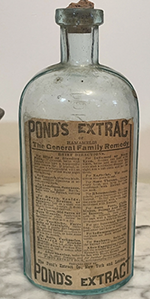
The medicinal uses of witch hazel, both Native American and European, are many, leading to the leaves being listed in the U. S. Pharmacopoeia. The bark has similar properties. Treatments for eye conditions, and inflammatory swelling were frequently cited. Extracts of witch hazel such as “Pond’s Extract” of the 1800's have been available for centuries and modern versions can still be bought in today’s drug stores.
More photos - more information on our information sheet.
Deer ticks and acorns
In Minnesota we know about deer ticks and we know about Lyme disease, but there is a large part of the tick cycle that starts before adult ticks start feeding on deer. Mice are much more important early in the larvae part of the cycle, and they are plentiful. New studies show we can predict the risk of the Lyme disease cycle two years in advance. You can do it by counting acorns.
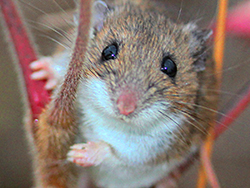 White-footed mouse. Photo ©Peterwchen CC BY-SA 4.0*
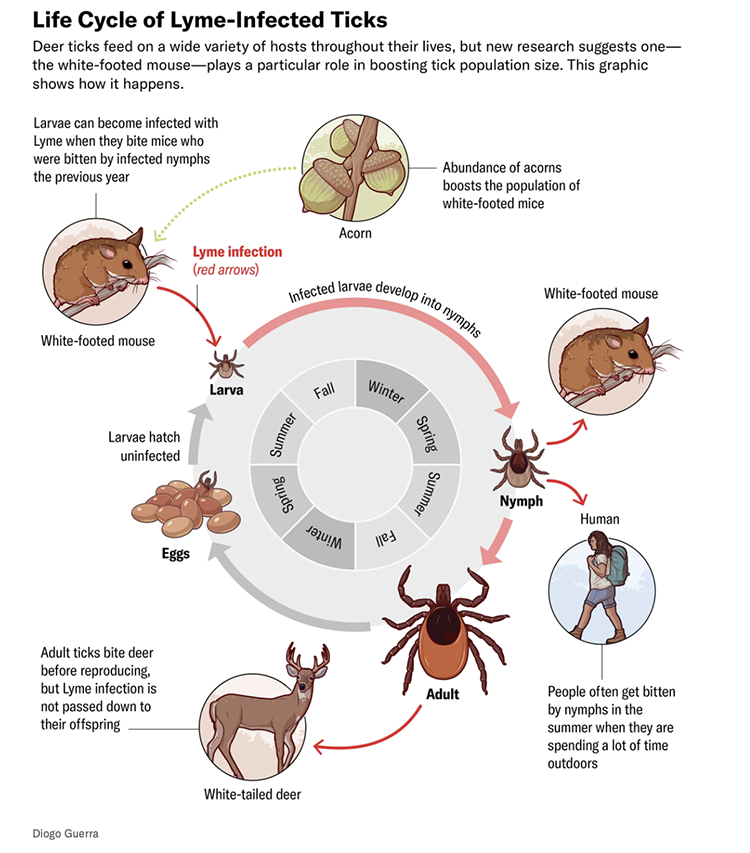
When red oak acorns are abundant, there are more white-footed mice (Peromyscus leucopus) that survive the winter. They are great hosts for the tick larvae and the largest souce of the Lyme bacterium - thus the more mice that survive the winter - the more tick larvae can attach to them the following spring when the tick eggs hatch. Mice are excellent at infecting the tick larvae with Lyme bacterium. A year later the larvae become nymphs looking for hosts to feed on and infect with the bacterium - that's deer and you and me.
You can read this entire study in Proceedings of the National Academy of Sciences USA.
Below: The life cycle of Lyme infected ticks. Graphic by Diego Guerra, ©Scientific American.
Florilegium exhibit and Friends event a great success.
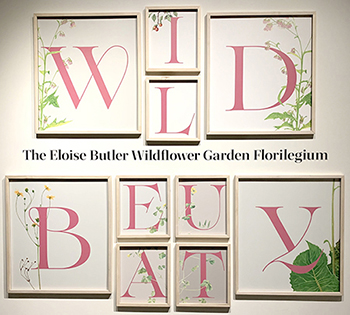
For a second time this year you are able to see the drawings of plants in the Eloise Butler Wildflower Garden that were created for the Eloise Butler Wildflower Garden Florilegium Project which wrapped up in 2025 with 111 completed drawings. Running from September 26th at the University of Minnesota’s Bell Museum is an exhibit of the entire collection with the show ending on January 3, 2027.
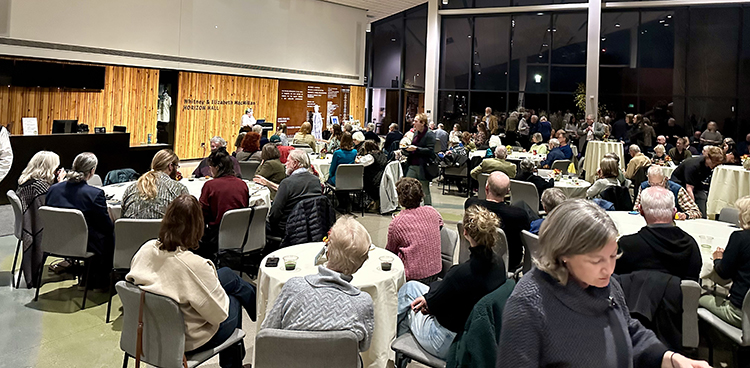
The Friends sponsored a celebration event for the Florilegium and Eloise Butler Council Ring fundraising campaign at the Bell during the exhibition on November 5. We had a great gathering with food and beverages, raffle prizes and free entry to the exhibition.
Four guest speakers gave short talks:
• Marilyn Garber - Director of the Minnesota School for Botanical Art.
• George Weiblen - Distinguished McKnight University Professor, Science Director and Curator of Plants, Bell Museum
• Tim Whitfeld - Bell Museum Herbarium Collections Manager
• Susan Wilkins Curator Eloise Butler Wildflower Garden and Bird Sanctuary.
Below: The Friends celebration event at the Bell Museum on November 5. Photo - Joelle Hoeft.
Above: The exhibition title arrangement. Photo G D Bebeau.
Historical Photo
The path up the first hill in the upland garden in October 1948. In the distance is the white oak on the central hill of the upland (much smaller back then). On the right is the boundary fence which is now no longer there; it was moved outward and replaced with new fencing when that part of the Garden was enlarged in 2022. Photo ©Friends of the Wildflower Garden from a Kodachrome by Martha Crone, October 15, 1948.

*Photo notes:
Photos with a “CC” credit are used for educational purposes under Creative Commons license. Learn about this at https://creativecommons.org/share-your-work/cclicenses/
Photos not credited are public domain.
Not subscribed to our email?
Questions about Twigs and Branches?
Email the writer at this address.
Want to donate to support our mission for the Eloise Butler Wildflower Garden?
Link to donation page
Or use the QR code below.

©2026 Friends of the Wildflower Garden, Inc. "www.friendsofeloisebutler.org." Compilation, editing by G. D. Bebeau. Photos by G D Bebeau or as credited. 112026