The Friends of the Wildflower Garden, Inc.
Plants of the Eloise Butler Wildflower Garden
The oldest public wildflower garden in the United States

Common Name
Bottle Gentian (Closed Gentian)
Scientific Name
Gentiana clausa Raf. and Gentiana andrewsii Griseb.
Plant Family
Gentian (Gentianaceae)
Garden Location
Upland
Prime Season
Late Summer to early Autumn
The blue closed Gentians in the Garden are of two similar species, differing only in the flower. The Bottle Gentians are an erect native perennial forb, growing on smooth stems 1 to 3 feet high, usually unbranched, but with multiple stems from the root.
The leaves are opposite, medium green, smooth, lance shaped, twice as long as wide, with parallel veins, mostly stalkless and usually pointed at the tip. Leaves at the top of the stem below the terminal flower cluster usually form a whorl. Leaves turn a nice purple in the autumn.
The inflorescence is a cluster of stalkless flowers at the top of the erect stem and sometimes also in the upper leaf axils.
The flowers have a 1 1/4 to 1 3/4 inch long tube shaped corolla of 5 blue lobes forming petals that are fused together by a connecting fringe, creating folds between the outside of the petals. (White albinos are known to occur). In the species G. clausa the petals remain closed at the tip with those fringes hidden by the closed tip. In the species G. andrewsii, (predominant in the photos below) the fringes of the flower lobes are longer than the petals and thus are visible at the tip of the closed flower. Flower color varies by age of the blooms and amount of sun, shading to a bronze as they age. The flower calyx is much shorter than the corolla and has ovate lobes with pointed tips. There are 2 small bracts under the calyx. The reproductive parts include 5 stamens that rise from around the base of the ovary. These have greenish-white filaments and yellow anthers. The ovary has single style that has a branched tip. The stamens are held against the ovary (but not united with it), with the anthers surrounding the style. As the ovary enlarges with fertilization it becomes ovate to elliptical, somewhat flattened while the stamens wither away.
Seeds: Fertile flowers produce a 2-sectioned seed capsule that splits when mature to release numerous very small flattened brown seeds to the wind. They have no pappus but are light enough (280,000 to the ounce) for wind distribution. Seeds need light for germination plus 60 days of cold stratification and for light, need to be surface sown.
Pollination: Only large bees such as the bumblebee can force open the flower tip of the corolla for pollination. A detailed study of this was published by Ohio State University in 1988. (PDF of article).
Habitat: Bottle Gentian grows in well drained soils of moist meadows, prairies and open woods with full sun to partial shade, however in partial shade the flower stems may not remain fully erect. It tolerates wet-mesic to mesic conditions. The root system is rhizomatous and from the rhizomes the plant can reproduce.
Names: The genus Gentiana is named after King Gentius of Illyria who, according to Pliny, discovered that the roots of certain Gentian species have medicinal qualities for treating malaria. The species name clausa is Latin referring to "closed." The name andrewsii is an honorary for Henry C. Andrews, an English botanical artist of the 1800's. The author name for the clausa plant classification ‘Raf.’ is for Constantine Samuel Rafinesque, (1783-1840), European polymath who traveled in the United States, lived here many years, collected specimens, and published over 6,700 binomial names for plants. He applied to be botanist on the Lewis & Clark expedition but Jefferson turned him down in favor of training Lewis to act as botanist and saving the expense of another person. The second species author ‘Griseb.’ is for August Grisebach (1814-1879), German botanist, professor at Gottingen, publisher of Flora of the British West Indies and whose work specialized in the Gentianaceae and Malpighiaceae.
Comparisons: Bottle Gentian is similar in appearance to the white flowered Plain Gentian, G. alba, except for the flower color. Bottle Gentian is less tolerant of dry conditions than Plain Gentian.


Above: The inflorescence is a terminal cluster of unstalked flowers. Clusters may also develop from the upper leaf axils.
Below: 1st photo - G. andrewsii shows the slightly open tip with the fringes visible and also the yellow anthers. Color varies by age of flower and amount of sunlight.


Below: 1st photo - The opposite leaves typically form a whorl just below the inflorescence. 2nd photo - The root system is rhizomatous and can support multiple flower stems.


Below: The leaves are opposite, smooth, lance shaped, twice as long as wide, with parallel veins and mostly stalkless, usually pointed at the tip.

Below: All blooms are from late August into late September. Colors darken as the season progresses. Baring an early frost, some will still be found in October. Note on the 1st and 3rd photos below (G. clausa) that secondary flower clusters can form in the upper leaf axils.


Seeds: 1st photo - Drying seed head above the purplish color of the fall foliage. 2nd photo - Within each drying seed capsule are several vertical rows of very fine seeds, which provide little interest to the birds.


Notes: Both Eloise Butler and Martha Crone planted this species numerous times.Eloise Butler planted G. andrewsii in 1908 with plants from Mound, MN; in 1909 from plants obtained in Mahtomedi, MN; and more plants in 1910, '13, '14, '16, 17, '18, '19, and every year thereafter until 1927 from various places. Martha Crone planted the same species in 1933, '36, '39, '44, '46, '47, '48, '50, '51, '53, and '55 as did Cary George in 1998. G. andrewsii is native in most counties in Minnesota. In North America G. andrewsii is found in the NE quadrant from Missouri - Virginia on the south and north to Manitoba, Ottawa and Quebec. Gentiana clausa, not G. andrewsii, was listed on Martha Crone's 1951 inventory of plants in the Garden at that time and it is not certain why she used just that single species name only as G. andrewsii goes back to Eloise Butler, unless she thought it was a valid name. It is uncertain when G. clausa was first planted, if it was, as it is not native to the state, but rather native to the east coast area where Eloise visited each Winter, but Eloise listed only local sources for her gentians.
G. andrewsii is one of five species of Gentiana that the Minnesota DNR reports having known populations. The others are G. affinis, Northern Gentian; G. flavida, Yellowish Gentian - (sometimes called Plain Gentian and listed as G. alba); G. puberulenta, Downy Gentian; and G. rubricaulis, Great Lakes Gentian. The first is on the state special concern list. Billington's Gentian, Gentiana x billingtonii is known only from one small population on a railroad line in Dakota County. Several other species were previously reported but there are none ever collected or the collection is very old.
Medicinal Lore: All known Gentian species have intensely bitter properties in the root. Over the centuries in Europe and Asia this has led to the development of herbal medicines, particularly from the old world species G. lutea. Gentian bitters are prepared from the dried root in use for general debility, weakness of the digestive system and lack of appetite. An alcoholic drink can even be prepared from the roots as once properly prepared and distilled, the distillate contains alcohol. The American species of gentian, including G. andrewsii, have similar properties to the European species. You will find much detail in Mrs. Grieve's Book. (Ref. #7).
Return to -- Site Plan/Archive Index --or-- List of Common Plant Names -- or -- List of Scientific Names -- or --Home Page - - - Back to top.
References: Plant characteristics are generally from sources 1A, 32, W2, W3, W7 & W8 plus others as specifically applied. Distribution principally from W1, W2 and 28C. Planting history generally from 1, 4 & 4a. Other sources by specific reference. See Reference List for details.
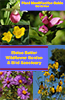 Identification booklet for most of the flowering forbs and small flowering shrubs of the Eloise Butler Wildflower Garden. Details Here.
©2013
Friends of the Wildflower Garden, Inc. Text and photos are by G. D. Bebeau unless otherwise credited. "www.friendsofeloisebutler.org"
092322