The Friends of the Wildflower Garden Inc.
Plants of the Eloise Butler Wildflower Garden
The oldest public wildflower garden in the United States

Common Name
Wild Ginger (Canadian Wild Ginger)
Scientific Name
Asarum canadense L.
Plant Family
Birthwort (Aristolochiaceae)
Garden Location
Woodland
Prime Season
Spring Flowering
Wild Ginger is a native erect perennial low growing forb, up to 8 inches high, usually appearing in clumps. There are no aerial stems.
Leaves: There are two stalked leaves that are broadly kidney-shaped to heart shaped with deeply cleft bases, acute to pointed tips when young, more rounded with age. These two leaves ascend from the tip of the short main stem, which lies prostrate on the ground. Leaf stalks are very hairy. The undersides have fine hair and the upper surface may also along the veins. The leaves are actually alternate but so closely spaced that they appear opposite. Mature leaves can be large - up to 6 inches across.
The inflorescence is a solitary flower on a short stalk rising between the bases of the two leaf stalks. Flowers and leaves appear at the same time. By the time the leaf is fully formed, the flower is mature.
The flower consists of a a false calyx tube formed by three sepals, the outside color of which is tan to purplish (usually purplish), with dense hair. The tips of the sepal lobes from a long linear tooth that spreads outward. The inside apex of the false tube is a deeper color, hairy, with an inner section white to pale yellowish-green color. The actual petals of the flower are vestigial or absent. Inside the false tube there are 12 stamens which are shorter than, and surround, six purplish styles which are united in a central column from the ovary.
Seed: A 6-celled fleshy seed capsule forms from the fertile flower. It contains numerous dark brown, somewhat 3-sided hard seeds. While plants can be started from seed, it takes a while. For germination, seeds need a cold moist storage period of 60 to 90 days, then a warm moist period of the same length followed by another cold period. Best to let nature do the work and allow 2 years. Dividing a clump is easier, or buy bare root plants and plant in the Spring. The plant self-seeds readily.
Habitat: Wild Ginger grows from a root system of thin rhizomes in rich to loamy soils and needs light shade and moist to not quite dry conditions. Colonies form via creeping rhizomes and by seed. It is the root that has the taste and smell of ginger. Propagation by seed is difficult as explained above. Much easier is dividing mature plants in the fall before dormancy. The rhizome can be cut into 6 or 8 inch sections and planted immediately. Fall is also the time to collect roots for drying. As the plants form a clump, another method is to simply divide off an outer section of the clump and move it - they transplant easily. Wild Ginger is considered un-attractive to deer. Eloise Butler's thoughts on this plant are given below.
Names: The rhizomes of the root have a ginger flavor, hence the common name. The genus name Asarum, is derived from asaron, the ancient Greek name for a now unidentified plant. The species name, canadense, refers to 'of Canada' - the location of the type plant. The author name for the plant classification, 'L.', is for Carl Linnaeus (1707-1778), Swedish botanist and the developer of the binomial nomenclature of modern taxonomy.
Comparisons: No other plant resembles this one in our geographic area. There are six recognized species of Asarum. All the others are west coast species.


Below: 1st photo - The flower stalk rises from between the two leaves. 2nd photo - The 3 purplish sepals form a false calyx tube. Petals are absent. The stamens are seen surrounding the six united styles.


Below: 1st photo - Where the two leaf stalks diverge from the main stem, the flower stalk rises. Stems and stalks are hairy. 2nd photo - The new flower and the new leaf appear at the same time.


Below: Flowers produce a fleshy 6-celled seed capsule containing numerous dark brown 3-sided hard seeds. The leaves have an intricate vein pattern, are heart to kidney shaped with a rounded tip. The lower surface and the margin is hairy, sometimes the upper surface also.


Below: Wild Ginger can form large colonies via the rhizomes and provide an extensive ground cover as seen here near the Crone Shelter at Eloise Butler.

Notes: Eloise Butler's records show that she first planted Wild Ginger plants obtained on May 25, 1907 from the "govt' reservation" at Minnehaha (presumably the area near Fort Snelling and the Bureau of Mines.) In September 1917 she brought in plants from Groveland Park in St. Paul; and added more in 1923 and '24. Wild Ginger was included on Martha Crone's 1951 census of plants in the Garden and she added plants in 1953, and presumably has been in the Garden continuously. Additional plants were added as recently as 2009, '12, and '13 by Susan Wilkins.
Wild Ginger is native to Minnesota in most counties except those in the SW quadrant. In North America it is found from the Dakotas and Manitoba eastward to the coast, Florida and the maritime provinces excepted. This is the only species of Asarum found in Minnesota.
Lore and uses: There is documentation of Native American use of the plant for medicinal purposes. Densmore (Ref.#5) reports the Minnesota Chippewa used the root as an appetizer by adding it to food while cooking and the dried root was also chewed to treat indigestion. The roots contain a volatile oil, a resin, a bitter principle called 'asarin,' alkaloids, sugar and a camphor like substance (Ref. #7).
A member of the Asarum genus was depicted in the family crest of the Tokugawa family of Shogūns in Japan - Japanese Wild Ginger, A. caulescens.
Eloise Butler wrote: "Many will not observe the flower of the wild ginger, although they cannot fail to see the large round leaves. But when one has learned the habit of the plant, he will stoop to look between the leaves for the purplish-red flower-bell bent down to the ground and tricked out with three slender horns. The enigma is easily interpreted: If the curious should lift up the flower to gaze upon it, the horns would protect it from the “evil eye”! With closer approach one perceives another charm - the delightful aromatic odor. Some persons carry about with them a piece of the thick rootstalk as a specific for bodily ills." (Published in the Sunday Minneapolis Tribune, May 7, 1911 - Complete article)
Return to -- Site Plan/Archive Index --or-- List of Common Plant Names -- or -- List of Scientific Names -- or --Home Page - - - Back to top.
References: Plant characteristics are generally from sources 1A, 32, W2, W3, W7 & W8 plus others as specifically applied. Distribution principally from W1, W2 and 28C. Planting history generally from 1, 4 & 4a. Other sources by specific reference. See Reference List for details.
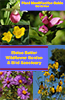 Identification booklet for most of the flowering forbs and small flowering shrubs of the Eloise Butler Wildflower Garden. Details Here.
©2014
Friends of the Wildflower Garden, Inc. Text and photos are by G D Bebeau unless otherwise credited. "www.friendsofeloisebutler.org"
050523