The Friends of the Wildflower Garden Inc.
Trees & Shrubs of the Eloise Butler Wildflower Garden
The oldest public wildflower garden in the United States

Common Name
Wild Plum (American Plum)
Scientific Name
Prunus americana Marshall
Plant Family
Rose (Rosaceae)
Garden Location
Woodland and Upland
Prime Season
Mid-April to Mid- May depending on season
Wild Plum is a moderate size fruit tree located in the Upland Garden on the first hill at Guidebook station 46. Newer plants are in the Woodland Garden and other places in the Upland.
Twigs are more reddish-brown with sharp pointed buds. The plant can be a large shrub or grow into tree size of up to 15 feet high with a crooked trunk and stiff lateral branches forming a spreading crown. The American Champion plum as of 2017 (in Cape Elizabeth ME) is 25 feet high and 84 inches in circumference.
Leaves are alternate, stalked, an elongated oval with a tapering tip, sharply toothed margins which are sometimes double toothed.
Flowering stems are usually grayish and scaly with age. The older ones may be marked with leaf scars and have short side twigs with thorn-like tips. Horizontal lenticels are visible. Older bark has irregular ridges and exfoliated patches.
Flowers: The one inch wide white 5-part flowers are single or in small clusters (umbels) of 2 to 5 flowers and occur along the stems, at the juncture of stem and leaf, and (in northern areas) open just as the leaves begin to unfurl. They are perfect, with numerous stamens whose exserted white filaments have yellow anthers. There is a single style. The green calyx has five pointed lobes. Flowers are individually stalked but the cluster is sessile.
Fruits are globose to oblong drupes about one inch in diameter, yellow to red, edible and often used in making jams and jellies. Inside the drupe is a single brown flattened oval stone. Fruit production is heavier every other year.
Habitat: P. americana is a woodland species, common in woodlands and savannas and woody draws of the Great Plains. The root system is fairly shallow and spreading allowing vegetative regeneration forming thickets. It grows in a variety of soils, prefers full sun, but must have at least 16 inches of moisture per year.
Names: The large genus, Prunus, is named after the Latin word for the plum. The species name, americana, refers to 'of America' as this is a new world species. This is the most broadly distributed wild plum in North America. The author name for the plant classification, ‘Marshall’ refers to Humphry Marshall (1722-1801), American Botanist, who published in 1785 - Arboretum Americanum: The American Grove, an Alphabetical Catalogue of Forest Trees and Shrubs, Natives of the American United States.


Above: The large Wild Plums in the Upland Garden (1st photo) and a newer on the central hill (2nd photo). Below: Individually stalked flowers appear in small unstalked clusters (umbels) all along the stems at the juncture of stem and leaf.

Below: Bark: Trunk bark of the large plum in the Upland Garden (1st photo) shows the characteristic irregular ridges and exfoliated patches of large older bark. Flowering stems are usually grayish and scaly with age; older flowering stems also have short twigs marked with leaf scars and with thorn-like tips. (2nd photo)


Bark: Horizontal lenticels are visible on older stems (1st photo) and younger stems (2nd photo) that still retain a reddish-brown color (center). Twigs (3rd photo) are reddish-brown as are the buds which are sharp pointed.


Above: A typical leaf of the wild plum. Below: A cluster of young plums just starting to turn yellow. In the wild, most will not remain on the plant long enough to turn red.


Below: Two American Plum in the Upland Garden, one listed as a Minneapolis Heritage Tree.

Notes: Eloise Butler did not note Wild Plum on her early census of plants in the original woodland area. She first records planting it on April 27. 1917 when she received a shipment of shrubs from Kelsey's Nursery in Boxford, Mass. More were planted in 1925. P. americana is listed on Martha Crone's 1951 inventory of plants in the Garden. This census was taken after the upland addition to the Garden was acquired in 1944 and may have been growing there at that time but Martha had also noted in growing in the lower Garden in 1939. Curator Susan Wilkins added 20 plants in 2015 and others in 2019. Wild Plum is native to Minnesota and is found in most counties with the exceptions being mostly in the far north central counties and some in the south where there is little forest growth remaining. Wild Plum is on the "threatened list" in New Hampshire and Vermont.
Heritage Tree: In the top photo above and in the last photo above is seen the largest American Plum in the Garden. It is of sufficient stature that it is listed as a Minneapolis Heritage Tree; for its champion size scoring 60 points, whereas the national champion noted in the text above scores 119 points. (Article - Heritage Trees in the Garden).
There are six species of Prunus native to Minnesota: P. americana, American Wild Plum; P. nigra, Canadian Plum (or Cherry); P. pensylvanica, Pin Cherry; P. pumila, Sand Cherry; P. serotina var. serotina, Black Cherry; and P. virginiana var. virginiana, Chokecherry. Several introduced species have also been reported.
Eloise Butler wrote:
"From a distance thickets of the thorny, still leafless, Wild Plum now seem covered with snowflakes, the illusion being due to myriads of white blossoms. We find the resultant red and yellow, somewhat puckery fruit not unpalatable, if the birds do not forestall us in harvesting it."
Wild plum is valuable for wildlife cover and food. It has a suckering habit, forming dense thickets that provide good bird habitat. It has shallow, wide spreading roots and when young is easily transplanted. The wood is heavy and hard. Martha Crone wrote in the April 1961 issue of The Fringed Gentian™ "The trees in May offer many lovely sights, but none finer than when in bloom, especially the wild cherries, plum and hawthorns."
Return to -- Site Plan/Archive Index --or-- List of Common Plant Names -- or -- List of Scientific Names -- or --Home Page - - - Back to top.
References: Plant characteristics are generally from sources 1A, 32, W2, W3, W7 & W8 plus others as specifically applied. Distribution principally from W1, W2 and 28C. Planting history generally from 1, 4 & 4a. Other sources by specific reference. See Reference List for details.
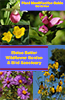 Identification booklet for most of the flowering forbs and small flowering shrubs of the Eloise Butler Wildflower Garden. Details Here.
©2015
Friends of the Wildflower Garden, Inc. Text and photos are by G D Bebeau unless otherwise credited. "www.friendsofeloisebutler.org"
052720