The Friends of the Wildflower Garden Inc.
Trees and Shrubs of the Eloise Butler Wildflower Garden
The oldest public wildflower garden in the United States

Common Name
Black Cherry (Black Wild Cherry, Whiskey Cherry, Rum-cherry)
Scientific Name
Prunus serotina Ehrh.
Plant Family
Rose (Rosaceae)
Garden Location
Woodland
Prime Season
Spring Flowering - late April to May
The Black Cherry is a large native tree that in Minnesota grows to a height of 50 feet or more. Michaux (Ref. #26c) writes in the 19th Century that the most fully developed trees were found in Ohio, Kentucky and Tennessee and on the banks of the Ohio River. He measured trees that were 12 to 16 feet in circumference and 80 to 100 feet high with uniform trunks, unbranched up to 25 to 30 feet. The largest specimen still living, as of 2018, is in Licking Ohio. It scores 327 points with a height of 111 feet and a circumference of 196 inches.
Bark of young limbs is smooth with conspicuous horizontal lenticels (ridges of pore openings). The inner bark is aromatic. The bark of larger trees is dark brown to black, fissured and scaly, and breaks off in patches.
Twigs are reddish brown, slender, with white lenticels. The buds have glossy reddish brown to greenish brown scales. Leaf scars are semicircular. Crushed twigs have a bitter odor and taste of almond.
The alternate leaves are simple, oblong-elliptic, no hair on top and usually with white hair that turns reddish on the underside along the midrib near the base of the leaf. Leaves are up to 6 inches long and 2 inches wide. Leaf edges are finely toothed. Leaves are attacked by a minute mite causing galls on the upper surface (see photo below).
The flowers are 5-parted, and occur in a dense 4 to 6 inch long cylindrical raceme which may droop downward and grows at the tip of the prior years twig growth. Each flower is about 1/2 inch wide, has 5 white spreading petals, 5 shorter sepals, 10 or more stamens with white filaments and yellow anthers, and a pistil with the stigma flattened. The stamens rise from a yellow to reddish nectary at the base of the corolla.
Fruit: The flowers mature in late summer into round berries, up to 1/3 inch in diameter, resembling miniature cherries, and which contain a single black stone. Ripe fruit is a deep purplish black, and has a slightly bitter but rich, winey flavor. Trees require about 10 years to begin producing fruit and the best production is on trees over 30 years old. Thoreau wrote some interesting comments about how the seeds are dispersed. See bottom of page.
Varieties: Three are recognized - var. alabamensis, found in the SE gulf states of the U.S. where the leaf blades are more obovate (widest above the center, length about 1.5x width), tips more obtuse to rounded, sparsely hairy on the under side; the other two have leaf blades more elliptic to oblong, tips pointed, underside smooth or with hair only on the ribs. These are: var. rufula, found in Texas to Arizona with leathery leaf blades and short leaf stalks - 4 to 10 mm; then var. serotina with leaf blades larger, only slightly leathery, longer stalks - 10 to 23 mm. The latter is the variety native to Minnesota. Photos below are of var. serotina.
Habitat: Black Cherry grows in forest openings, edge rows and does best as a second generation tree following removal of the first generation trees. It is shade tolerant and will grow as an understory tree, but not to its best ability and usually will not flower. The plant has a shallow root system and is susceptible to wind blow down.
Names: The large genus, Prunus, is named after the Latin word for the plum. The species, serotina, means 'late in flowering'. The author name for the plant classification, “Ehrh.” is for Jokob Friedrich Ehrhart (1742-1795), German botanist, pupil of Linnaeus, director of the Botanical Garden of Hannover and the first author to use subspecies in botanical literature. In the 19th Century this tree was classified as Cerasus serotina, and sometimes you will find it listed as Cerasus virginiana which is incorrect, as that name applied to the Chokecherry. As to how the alternate common names came about - see text below.
Comparisons: Flowers and fruits resemble the Chokecherry shrub.
Hazard: Like the chokecherry, the leaves, twigs, bark and seed are somewhat toxic as they contain a cyanogenic glycoside. Browsing livestock are affected (see below) but native mammals like deer do not seem to be.

Below: A typical flower raceme filled with flowers showing the conspicuous stamens, pistil with flattened style, and the pinkish nectary in the corolla base.


Below: 1st photo The flower raceme forms at the same time as the leaves unfold. 2nd photo - Flower buds fill numerous racemes near the ends of branches forming on prior year wood.


Below: 1st photo - Green fruit formed 30 days after first flowering. Note the reddish color of young twigs. 2nd photo - Black Cherry fruit turning from red to the mature black color.


Below: 1st photo - The toxic pits of the Wild Black cherry compared in size to the drupe itself. 2nd photo - Comparison of the relative sizes of the pits of Chokecherry (on the right) and Wild Black Cherry (on the left). Note size and color differences. Both are toxic.


Below: 1st photo - The oblong-elliptic alternate leaves. 2nd photo - The underside of a young leaf showing the white midrib hair which ages to brown. 3rd photo - The underside midrib showing the brownish fine hair of maturity.


Below: 1st photo - The Black Cherry leaf is attacked by a tiny mite, Eriophyes cerasicrumena, known as the "black cherry finger gall mite". It causes these reddish club shaped eruptions on the leaf surface. 2nd photo - The scaly bark of a mature Black Cherry - Unless you look at the entire tree, some may confuse Common Buckthorn bark, (3rd photo) with the Black Cherry, (2nd photo).


Below: 1st photo - Former Eloise Butler Gardener Cary George with the Garden's large Black Cherry that is a Minneapolis Heritage Tree. Note the large trunk height. It grows near the Hemlocks and has kept up with their growth. 2nd & 3rd photos - You may find it unusual to see so many cherries turning color that are still on the tree as wildlife begins to feast as soon as the green berries are fully formed. Ten to eleven weeks after flowering the berries are the mature black color.


Below: Twigs (spring twig shown) are reddish brown, slender, with white lenticels. The buds have glossy reddish brown to greenish brown scales. Leaf scars are semicircular. Crushed twigs have a bitter odor and taste of almond.

Notes: Eloise Butler planted Black Cherry in the Garden on May 28, 1909 with plants from the Park Board Nursery, and again on Oct. 3, 1913 with seedlings transplanted from Brownie's pond (presumably the one next to Cedar Lake in Minneapolis). Then, in 1915, she discovered a tree growing on the east side of what she termed 'Gentian Meadow' which would classify the tree as indigenous to the Garden. Black Cherry has been listed on each Garden census since then. Gardener Cary George added more in 1989. Ten additional trees were planted by Curator Susan Wilkins in 2008, more in 2012. Black Cherry is native to the eastern half of North America and in the U.S. its western range is the extent of the original tall grass prairie - out to Nebraska and Kansas. Its range then extends southwest along the southern edge of the U.S. as far west as Arizona. As it is a woodland tree, in Minnesota it is found in counties in a diagonal band from the SE to the NW - basically the old 'Big Woods'. Absent in the NE and SW.
Heritage Tree: One specimen in the Garden is on the Minneapolis Heritage Tree List. It grows with the Hemlocks near the back gate (photo above) and scored 137.5 points when it was listed in 1985. Its height then was 73 feet and it was 57 inches in circumference.
There are six species of Prunus native to Minnesota: P. americana, American Wild Plum; P. nigra, Canadian Plum (or Cherry); P. pensylvanica, Pin Cherry; P. pumila, Sand Cherry; P. serotina var. serotina, Black Cherry; and P. virginiana var. virginiana, Chokecherry. Several introduced species have also been reported.
Lore: The fruit of the Black Cherry has uses similar to the Chokecherry - eaten, jelly, wine, etc. as long as precautions are taken to remove the pits which contain the toxin. Densmore (Ref. #5) in her study of the Minnesota Chippewa reports on the use of the berries for food. The Chippewa would squeeze them in their hands and make them into little cakes, dry them on birch bark, without cooking, and then store them for later use for cooking. Mixed with dried meat, they made pemmican. They also made a decoction from the root or of the bark, which was used for ulcers and cholera infantum. For scrofulous neck, the recipe was - use fresh roots mashed as a poultice; or to scrape the inner bark, boil, and use as a water wash. More medicine below. The common name "rum-cherry" came about from the Colonial use of flavoring a cherry tavern drink with rum - "cherry bounce" as it was called.
Uses: Black Cherry is the source of cherry wood for cabinet wood and furniture. The heartwood is of a dull, light red tint, which deepens with age when exposed to light.
Medicinally, it has been the inner bark where the glycoside is concentrated, as are acids and traces of volatile oil, that has been used to prepare tonics for coughs and for sedatives and as an astringent. The inner bark has been listed in the USP (United States Pharmacopoeia) from 1820 to the present and in the NF (National Formulary) since the 1888 1st edition. Bark is preferred to be collected in the autumn. The chemicals in the bark act as a sedative and expectorant and are also used today as a flavoring agent. Bark tea is used for coughs, colds and cholera. John Lloyd (Ref. #21) wrote that no more popular bark, except for sassafras, is known for home medication. Pennsylvania Dutch frequently drank wild cherry tea made from bark and fruit. Tea of bark was given to Cherokee women in the first pains of childbirth. The Potawatomies used the bark for an eyewash and made a tonic cough drink from the berries. The Menominees pounded the inner bark for a poultice on a wound. The list goes on and on.
Toxicity to cattle: "In America when the wild black cherry, Prunus serotina, is felled, prussic acid concentrates in the foliage as the leaves begin to dry. For some reason such leaves have a special appeal for cattle. Many have died in consequence. It seems curious that in such a life and death matter no instinct warns them of their peril. Perhaps the fact that cattle swallow large quantities of food rapidly and only later bring it back for a thorough chewing reduces their chances of detecting what is harmful." Edwin Way Teale in Springtime in Britain.
Thoreau wrote in his journals about the way the seed is dispersed: "See how artfully the seed of the cherry is placed in order that a bird may be compelled to transport it - in the very midst of a tempting pericarp, so that the creature that would devour this must commonly take the stone also into its mouth or bill. If you ever ate a cherry and did not make two bites of it, you must have perceived it - right in the center of the luscious morsel, a large earthy residuum left on the tongue We thus take into our mouths cherry stones as big as peas, a dozen at once, for Nature can persuade us to do almost anything when she would compass her ends. Some wild men and children instinctively swallow these, like the birds, when in a hurry, as the shortest way to get rid of them. It is only princes who can afford to have their cherry puddings stoned, and so make their lives more completely luxurious and useless; and perhaps they expect to atone for this by their planting a tree with a flourish of trumpets now and then."
Return to -- Site Plan/Archive Index --or-- List of Common Plant Names -- or -- List of Scientific Names -- or --Home Page - - - Back to top.
References: Plant characteristics are generally from sources 1A, 32, W2, W3, W7 & W8 plus others as specifically applied. Distribution principally from W1, W2 and 28C. Planting history generally from 1, 4 & 4a. Other sources by specific reference. See Reference List for details.
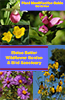 Identification booklet for most of the flowering forbs and small flowering shrubs of the Eloise Butler Wildflower Garden. Details Here.
©2014
Friends of the Wildflower Garden, Inc. Text and photos are by G D Bebeau unless otherwise credited. "www.friendsofeloisebutler.org"
052920